Meet the Local History Librarian – Becky George, Pickering Public Library

Up next is Becky George, Local History and Genealogy Librarian for the Pickering Public Library.
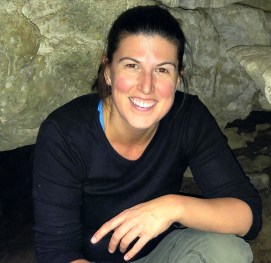
Headshot2What do you do at the Pickering Public Library ? 

I am the Local History and Genealogy Librarian. The Library has a wonderful collection of photographs and documents relating to Pickering’s history as far back as 1811. It is my job to collect, preserve and promote Pickering’s heritage. This includes not just old records but also making sure that the community’s activities today are captured in a way to ensure our history is preserved for future generations too.

Why did you choose this career?

It combines two of my passions, Ontario’s history and civic pride and engagement. By helping preserve and promote Pickering’s history I help foster community building since all of us living in Pickering share our local history. I like to get people excited about where they live and help them find connections with their neighbours and local government.

What is your favourite part of your job?

I love to help people and each question I get is a chance to solve a mystery and enhance someone’s day.

What do you find to be the most challenging part of your job?

Keeping up with new forms of communication is a challenge. It is relatively easy to collect and preserve paper-based records but it is not as easy with electronic records. There is so much content being produced by the people and businesses of Pickering including email, websites, and video which is hard to capture and preserve reliably and I worry that we may lose many of these important records in the future.

How did you get into the field? 

I first studied and worked as an archaeologist in Ontario but discovered that I preferred learning about people based on their writings and photographs rather than their garbage. This led me to pursue my Masters degree at the University of Toronto to become an archivist. When I graduated I was lucky enough to find a job at the Pickering Public Library. I grew up in Pickering so taking care of the Local History Collection here is a dream job for me. My connection and experience with the history and geography of Pickering is a great asset in my work.

What is your favourite memory of the library?

Pickering celebrated its bicentennial (200th birthday) in 2011 and we were able to organize a number of memorable events. We displayed the Township’s original Council minute book from 1811 in our City Hall and hosted a play based on early civic life in Pickering for local school children. We also completed a family history project and featured a written history and display of ten families who influenced the development of Pickering. Conducting the oral history interviews for this project was so much fun for me. Hearing history first hand from those that lived it is thrilling for me.

Do you have a favourite artifact/ collection?

Our map collection is my favourite. We have land-owner maps of Pickering dating back to 1860. Whenever I am talking or thinking about an historical event I always like to visualize what Pickering looked like at the time and maps help bring that to life.

To see some of our cool maps and other items in the Pickering Local History Collection, check out the Ajax-Pickering Digital Archive at www.pada.ca.

Posted in DRAAG Information | Tagged , , | Leave a comment

Meet the Local History Librarian – Eva Saether, Oshawa Public Library

Up next is Eva Saether, Local History and Genealogy Librarian for the Oshawa Public Library.

SaetherPic2015What do you do at Oshawa Public Libraries?
I am the Local History and Genealogy Librarian for Oshawa Public Libraries. The purpose of the local history collection is to collect, maintain, and provide access to researchers and the general public print material and online resources that pertain to the heritage of Oshawa.

Why did you choose this career?

I enjoy helping people with their library needs as well as independent research. My position provides both. Library work is a natural extension of who I am. As a child, I attended story times and book talks in a library branch in east Toronto. I not only developed a love for books but a strong desire to do the librarian’s work! I spent hours following the librarian around asking her to give me tasks to help her – sharpening pencils, straightening books, to the point of being a complete nuisance! I began working in the library as a student page, and the rest, as they say is history…

What is your favourite part of your job?

Helping people with their family research. I provide one-on-one tutorials teaching people how to access and use library resources. I also provide seminars on genealogy and local history as they pertain to Oshawa Public Libraries’ collections and resources.

The local history collection with its focus on historical information about Oshawa, and materials by and about the people of Oshawa, contributes significantly to the historical, educational, and community-building work of the public library.

What do you find to be the most challenging part of your job? Many people search for information about their home.  This, however, can be difficult and frustrating. The reward is the discovery of a fascinating event, such as a wedding that took place in a home in the 1920s.  The local paper sometimes covered these event with photos of the interior of the home.

 How did you get into the field?

I worked as a public service clerk at the Oshawa Public Libraries when I made the decision to attend the Information Studies program at the University of Toronto.  After completing my Master’s Degree, I returned to the Library, and shortly thereafter, a librarian position became available.  I applied and became the Local History and Genealogy Librarian.

What is your favourite memory of the library?

My discovery of the vast and unique local history collection, from books and pamphlets, to slides, photos, and 16 mm films.

 Do you have a favourite artifact/ collection?

The photographic collection pertaining to Robert Samuel McLaughlin.  The collections, McLaughlin: Remembering the Legacy and Heritage Collection: Oshawa Images, can be found on the Oshawa Public Libraries’ website. Taken together, these photographs tell an extraordinary story of this remarkable man.

Posted in DRAAG Information | Tagged , , | Leave a comment

Meet the Curator – Earl Wotton, Ontario Regiment Museum

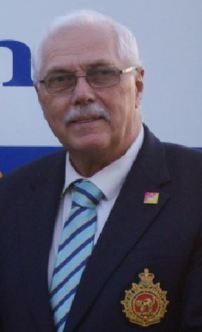
Today we have the opportunity to learn a bit more about a very unique site in Durham Region, the Ontario Regiment Museum.  Up until 2015, this amazing site had been run entirely by dedicated volunteers like Earl Wotton. These passionate individuals created fascinating exhibits, maintained a large archival collection and share their love of this collection with citizens from Durham Region and beyond.

Earl_WottonWhat do you do at the Ontario Regiment Museum?
I serve as the curator of the static display section at the Ontario Regiment Museum. We have a number of volunteers who share the work of maintaining, interpreting and displaying our collection of military artefacts, photos and documents.

Why did you choose this career?
This is not a career for me in the classic sense. Following my retirement from the corporate world in 2008, I volunteered to support the museum as a tour guide. In 2010, I was asked to fill the vacant role of curator.

What is your favourite part of your job?
My favourite part of the job is researching, interpreting and displaying artefacts. Every artefact has a story to tell. I see it as our job here at this museum to help these inanimate objects tell their story.

What do you find to be the most challenging part of your job?
Insufficient space, time, resources and money to do all the things we would like to do. I imagine that every other respondent has said something similar.

How did you get into the field?
I have always had an interest in military history, especially that of the Ontario Regiment as my father commanded the unit in the early 1950s. I also have an interest in education having taught business courses at night school for over 20 years. Volunteering here has provided a platform to explore both interests.

What is your favourite memory of the museum?
Believe it or not, my favourite memory was demolishing the interior of the museum and rebuilding it as a more modern, accessible space to tell the story of our regiment.

Do you have a favourite artifact/ collection?
There is one. A simple newsletter “De Nieuwesbode” (News messenger). This newspaper had been published illegally in Holland during the German occupation. The copy we have is dated May 5, 1945, the day of the German surrender. This simple document represents the first free press in Holland. It contains the following quote “Our liberation is the last page and the happy end of a bitter novel and at the same time the first page of a new book that shall be written by us.” Powerful stuff.

Posted in DRAAG Information | Tagged , , | Leave a comment

Meet the Curator – Sonya Jones, The RMG

As we welcome the first full week of April with a spring in our step, we also celebrate Archives Awareness Week!  Once again this year, we begin our celebrations by introducing you to some of the amazing people, and their collections, that make up DRAAG!

This year we begin with Sonya Jones, Associate Curator / Curator of the Thomas Bouckley Collection at The RMG. The RMG is a vibrant public art museum located in downtown Oshawa focusing on modern and contemporary Canadian art.

sonya2015What do you do at The Robert McLaughlin Gallery? 

I am the Associate Curator/Curator of the Thomas Bouckley Collection at The Robert McLaughlin Gallery. Some of my duties include: curating contemporary art and historical photography exhibitions, collections management for all of our collections, managing and administrating our three collection databases, managing copyright and reproduction, facilitating art loans, and creating and implementing public programming activities.

Why did you choose this career?

I have a passion for art and history, and love visual culture.

What is your favourite part of your job?

I love connecting the community with its history and finding ways to interpret art or history in engaging and accessible ways.

What do you find to be the most challenging part of your job?

Copyright has always been challenging. Not only is it complicated at times, but you have to stay on top of what the laws currently are.

How did you get into the field?

I studied Art History at Carleton University. While a student there, I worked part time at the Carleton University Art Gallery. This job opened many doors for me—whether inspiring me to pursue a career in an art gallery or giving me wonderful networking opportunities.

What is your favourite memory of the Gallery?

I would say working with the Oshawa Senior Citizen’s Camera Club on a Then and Now series documenting Oshawa’s evolution. The seniors are such a pleasure to work with, and they have such an enthusiasm for The Thomas Bouckley Collection and Oshawa’s history.

Do you have a favourite artifact/ collection?

My favourite subject in the Thomas Bouckley Collection is the circus images. I started at the gallery in 2008, and spent my first year getting to know the collection, Oshawa’s history and the role of the collection and gallery to the community. While exploring the breadth of the collection, I discovered a selection of unprinted negatives of circus images, including written notes about the negatives. These images inspired an exhibition on the subject and were fascinating and charming. It felt wonderful to bring these previously unseen images of Oshawa’s past to light.

To learn more about The RMG, in particular their amazing Thomas Bouckley collection of historic photographs, visit their website at The RMG.

Posted in Archives in the News, DRAAG Information | Tagged , , , , , | Leave a comment

Archives Awareness Week

Once again this year, DRAAG is celebrating Archives Awareness Week.  Throughout the week of April 4th until the 8th we will be putting the spotlight on those who care for our documentary history throughout the Region and beyond!  Visit here to see profiles on some of the amazing people and collections that tell the history of our area.

New to our celebrations this year, members of DRAAG will be featured on Talk Durham, a news show hosted by Don Pitman on Roger’s TV. Tune in on Thursday, April 7 from 7:30 until 8 to see us chat about some of the amazing items we are privileged to care for.

Posted in Archives in the News, DRAAG Information | Tagged , , | Leave a comment

This Month’s Header

The header this month shows a group of Oshawa residents dressed for the cold weather and heading out on their cutter.  The photograph was part of a collection donated to the Oshawa Community Museum in 1971.

A971.39.16

Posted in DRAAG Information | Tagged , | Leave a comment

Meet the Archivist – Erin Walsh, Port Hope Archives

It is April and along with those April showers it also brings with it Archives Awareness Week.  We thought it was be interesting to once again learn more about our members and the various institutions that make up DRAAG!

TAP - E  Walsh P  B  Bolton 2011

Photo credit to Ted Amsden

Today we are going to learn more about Erin Walsh, Archivist at the Port Hope Archives. Erin Walsh has been the archivist at the Port Hope Archives since the fall of 2009.  She graduated from the Faculty of Information at the University of Toronto that same year; and has worked in the heritage field for 8 years.

What do you do at the Port Hope Archives?

Because the Port Hope Archives is a stand-alone institution, I have to wear a lot of hats, but technically my title is “Archivist.”  I’m responsible for the well-being of the collection, accepting and processing donations, facilitating access to the collection (and other resources we have at the PHA), volunteer management, outreach and events, social media, office administration, and even maintaining the website!

Why did you choose this career?

It was while I was doing my undergrad degree at Trent University that I decided to become an archivist.

Originally, I had intended to become a high school Drama and History teacher, until I realized that everyone else doing a History degree was also going to be a teacher.  At that point I made an appointment with a career councillor at Trent, and she suggested I look into being a librarian/archivist.

I talked to a few people involved in the field, eventually I started volunteering at the Peterborough Museum and Archives, and fell in love!

What is your favourite part of your job?

I love my job!

Mostly because I get to do a little bit of something different every day.  I could never decide which aspect of archival studies I liked most, so I knew I wanted to work in a small archives where I could dabble in everything.

How did you get into the archival field?

While I was a student at Trent, I volunteered at the Peterborough Museum & Archives.  It was Mary Charles (the archivist there), who convinced me to pursue archival studies.

I enrolled in the Faculty of Information [Studies] at the University of Toronto; and in 2009, I graduated with a Master of Information Studies, with a focus on both librarianship and archives & records management.  That same year I started at the Port Hope Archives.

While I was in graduate school, I worked at the University College Archives (UofT), Clarington Museums and Archives, Oshawa Public Libraries, and did an internship at the Ontario Association of Art Galleries; all positions where I learned A LOT about archives and records management.

What is your favourite memory of the Archives?

My favourite memory of working at the Port Hope Archives occurred in late fall of 2012.  We had been in contact with a potential donor regarding some original land deeds, diaries, family history tapes, etc.; all part of this AMAZING family collection.*

When she came to donate the collection, she brought a bunch of relatives and had a mini family reunion at the archives.  It was such a lovely moment!  And highlighted all the wonderful reasons why I love being an archivist.

*The collection is the Goheen Family Collection (PHA# 2012.55) if you’re interested in more information!

Do you have a favourite artifact or collection?

I’ve been mulling over this question, because we have so many great items in our collection!  If I was forced to choose, I would say it’s a tie between:

  1. Thos. Ward’s Baptismal Certificate:

Thomas Ward was born in England to Thomas Sr. and Sarah, and was baptized in the Parish of St. Andrew, Holborn, on July 23rd 1770.  He immigrated to Canada in the early 19th century and settled in Hope Township.  When the War of 1812 began he volunteered and was stationed as a Captain patrolling the shoreline of Lake Ontario from York to Presqu’ile.  He appears in Hope Township in the 1851 Census of Canada West at the age of 82; and the 1861 Census of Upper Canada at the age of 91.  It is assumed that he died in 1861, sometime after the census was taken, when he was also buried in St. Mark’s Anglican Cemetery.

Thomas Ward, besides his distinguished service to the crown, has the honour of being the original owner of the oldest document in the Port Hope Archives’ collection.  The baptismal certificate dated 1788 gives a lot of crucial information about Thomas’ early years in England; it also out-ages all other documents in our collection, even pre-dating the settlement of Port Hope itself.

  1. Wilbur P. Baulch World War I Diary:

Wilbur Penorwood Baulch was born on April 25th, 1890 in Woodstock, Ontario to Samuel Fredrick Baulch and Ida Martha White Davis. Wilbur married Clara Beatrice Dunkley (1892-1976) on February 16th, 1915 and they had one son, Fredrick William Arthur Baulch. Samuel Fredrick, Ida Martha, Wilbur Penorwood and Clara Beatrice are all buried at Welcome United Cemetery, in the Municipality of Port Hope.

If you want more information on Wilbur and the diary, please visit our website: http://www.porthopearchives.com/wilbur-p-baulch.html

Posted in DRAAG Information | Leave a comment

My Favourite Collection – Megan Pugh, Whitby Archives

Cullen Hay Perry Letters

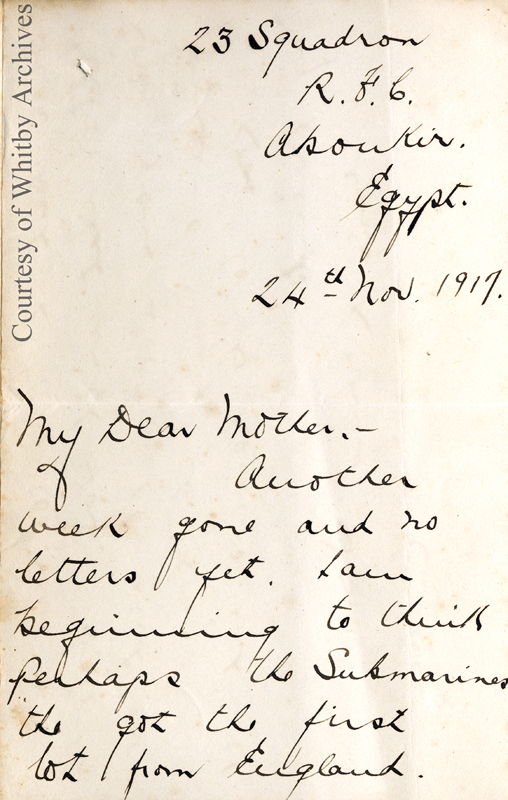
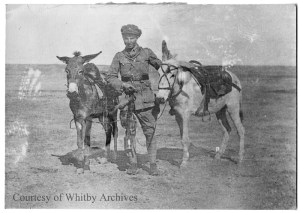
One of my favourite collections at the Whitby Archives is the Cullen Hay Perry Letters Nov_24_1917_1from the First World War. Cullen Hay Perry was born in Whitby, Ontario on August 15, 1893 to John Ham Perry and Louisa Hay. His grandfather was Peter Perry the founder of Whitby. Cullen served with the Queen’s Own Rifles from 1914-1917 and sustained injuries at a number of battles including the Second Battle of Ypres and Vimy Ridge. Following the injury at Vimy and upon being discharged from the hospital, Cullen transferred to the Royal Flying Corps in September 1917 and trained as a pilot in Alexandria, Egypt. He was killed in action in a plane crash on February 3, 1918 in Alexandria and is buried at the Alexandria (Hadra) War Memorial Cemetery.

Cullen Hay Perry’s collection consists of seven letters he wrote to his mother, Louisa Hay, between August and October through December 1917. Nov_24_1917_3From the letters the reader can see the journey he took from Reading, England to “near Italy” to Alexandria, Egypt as he describes the weather and other events of the war. In his writings, Cullen inquires about people and events from Whitby and tells his mother how much his misses home. In his final letter, written two months before his death, Cullen talks about plans for after the war and asks his mother to come visit him in England. The letters document the love and respect Cullen had for his mother as he ends all of his letters with “your loving son”. Come in and experience the letters for yourself!

29-002-071

Cullen Hay Perry in the desert in Egypt with two donkeys, c.1918


Posted in DRAAG Information | Tagged , , , , , | Leave a comment

My Favourite Collection – Sarah Ferencz, Whitby Archives

Whitby Knitting Club Fonds

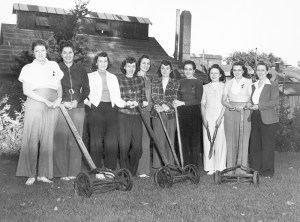
The Whitby Knitting Club fonds is small enough to fit into one box but the story behind the club and its activities never cease to inspire me. Originally known as the Ten Monday Nighters, the club formed in October 1940 with the purpose of saving money for vacations, weekend trips, and general enjoyment. It wasn’t long before the club’s objectives changed to reflect the climate of the Second World War in Canada and the need for local groups to support the war effort. They changed their name to the Whitby Knitting Club, known locally as the Whit-Knits, and began raising money to purchase wool which they knit into socks for Whitby’s service men and women.

29-003-017

Group Portrait of Members of the Whit-Knit Club with Lawn Mowers, c.1943

The club held a charter under the War Charities Act for the duration of the War and received funds from the Department of National War Services in order to supplement their own fundraising. The women contributed 50 cents a month in dues and regularly cut lawns, babysat, and organized dances and card nights to raise money to purchase wool. As their funds increased, the standard package sent by the Whit-Knits included a carton of cigarettes, a large chocolate bar, razor blades, and the club’s trademark yellow-banded socks.

The package also contained a standard letter providing the soldier or nurse with the most recent news in Whtiby. The Whitby Knitting Club fonds contains the letters of thanks written by Whitby’s soldiers, officers, and nurses who were lucky enough to receive a Whit-Knit package. The 200 letters span from 1940 to 1946 and are an excellent account of the different military theatres of the Second World War, with letters postmarked from the UK, France, Italy, and the Mediterranean. Although most of the content varies from one letter to another, the constant theme expressed by the soldiers in their correspondence is one of gratitude for the reminder of home.

The records of the Whit-Knits call attention to the vital role women played in their communities to support the war effort. Their actions helped to provide local soldiers, some of them overseas for a number of years, with a sense of home, a pair of warm, clean socks, and a few treats to lighten the mood. This fonds is heartwarming because the letters contain earnest expressions of gratitude from a group of people, soldiers and other service men and women, on whom we often heap praise and thanks for the sacrifices they made in going to war.

Following the end of the Second World War, the Whit-Knits decided in a meeting on May 22, 1946 that they would not renew the club’s charter under the War Charities Act and the remaining funds were to be donated to the Christie Street Veterans’ Hospital in Toronto. The Whit-Knit Club officially ceased operations on December 17, 1946.

Posted in DRAAG Information | Tagged , , , , | Leave a comment

My Favourite Collection – Jennifer Weymark, Oshawa Museum

Up until the summer of 2013, my answer to this question would have been clear cut “My favourite collection is the Garrow Collection”.  This is a collection of letter written by an Oshawa resident from the Western Front during World War I.  While I still find that collection fascinating and a truly wonderful teaching tool, I have to say that when it comes to my favourite collection, it is officially a tie.

In the summer of 2013, a box of letters, receipts and other paper odds and ends was donated to the archives.  What made this collection so important is who the papers once belonged to – Thomas Henry.

A013.4.12 (C) (2)

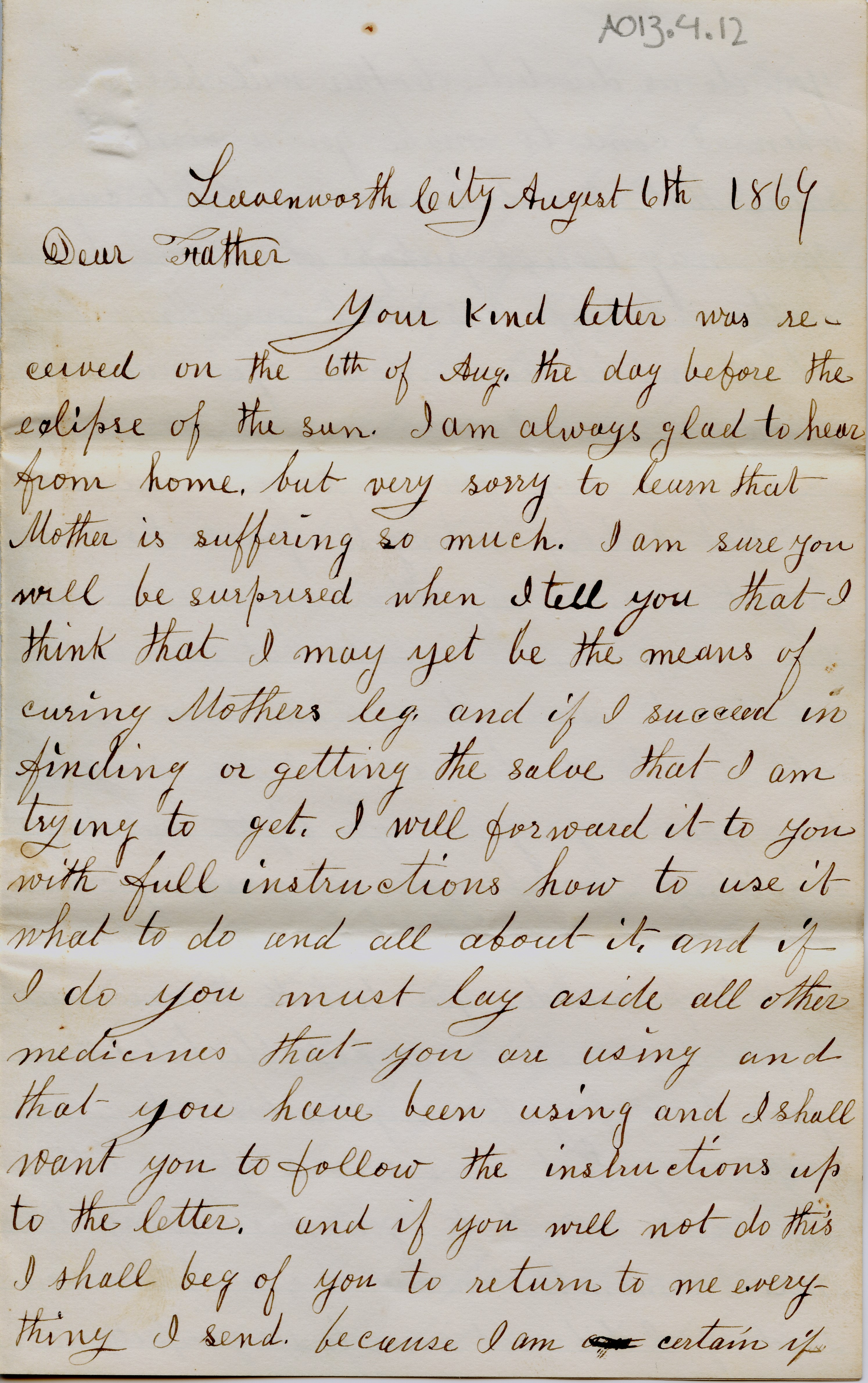
Letter from Ebenezer Henry to Thomas Henry, dated August 6, 1869. A013.4.12(c)

Henry House, the former home of Thomas Henry, is an integral part of the Oshawa Museum.  This new collection contained letters written to and from Thomas and his children.  These letters give us personal insights into the family dynamics and how the family responded to events of the time period. It is in the letters that we learn more about the illness that left the matriarch of the family lame.  We know that she visited a local doctor regarding her legs and her son Ebenezer sent countless suggestions for different balms and treatments to help her at least be comfortable.

The collection also helped to answer a question that had remained a bit of a mystery.  The two earliest census records list the Henry’s as living in a one storey stone home. We can say definitively that this stone home was Henry House but we are left wondering when the second storey was added.  The later census records do not indicate the type and size of home so we could not look to them to find the answer.  Well, within the collection were several receipts for a variety of construction material purchased by Thomas Henry, the sort of material needed to build onto their home.  These receipts seem to indicate that the second storey was added on around 1863.  If only we had this information when we published the book on Henry House in 2012!

The information in these letters is incredible, so much so that we decided that our next publication will be on these letters and how they can help us to better understand the world that the Henry family lived in.

Posted in DRAAG Information | Tagged , , , | 1 Comment